

The Role of Sulfur in Structural Beauty
When people think about beauty nutrients, they often think collagen or biotin.
But one of the most structurally important elements in the body is sulfur — and MSM (methylsulfonylmethane) is a supplemental source of sulfur.
Sulfur plays a critical role in:
-
Collagen structure
-
Keratin formation (hair + nails)
-
Connective tissue integrity
-
Skin resilience
MSM doesn’t “create beauty.”
It supports the structures that make healthy hair, skin and nails possible.
Let’s look at what the research says.

MSM & Skin Structure
Collagen and elastin rely on sulfur-containing amino acids for proper cross-linking and structural integrity.
MSM provides bioavailable sulfur that may support this process.
A double-blind, placebo-controlled clinical study published in Natural Medicine Journal evaluated MSM supplementation over 16 weeks and found statistically significant improvements in:
-
Wrinkle appearance
-
Skin firmness
-
Skin elasticity
Compared to placebo.¹
Another review published in Nutrients (2017) outlined MSM’s antioxidant and anti-inflammatory properties, noting potential relevance for skin health and ageing.²
While MSM is not a cosmetic “quick fix,” the evidence suggests it may support dermal structure over time.

MSM & Hair Health
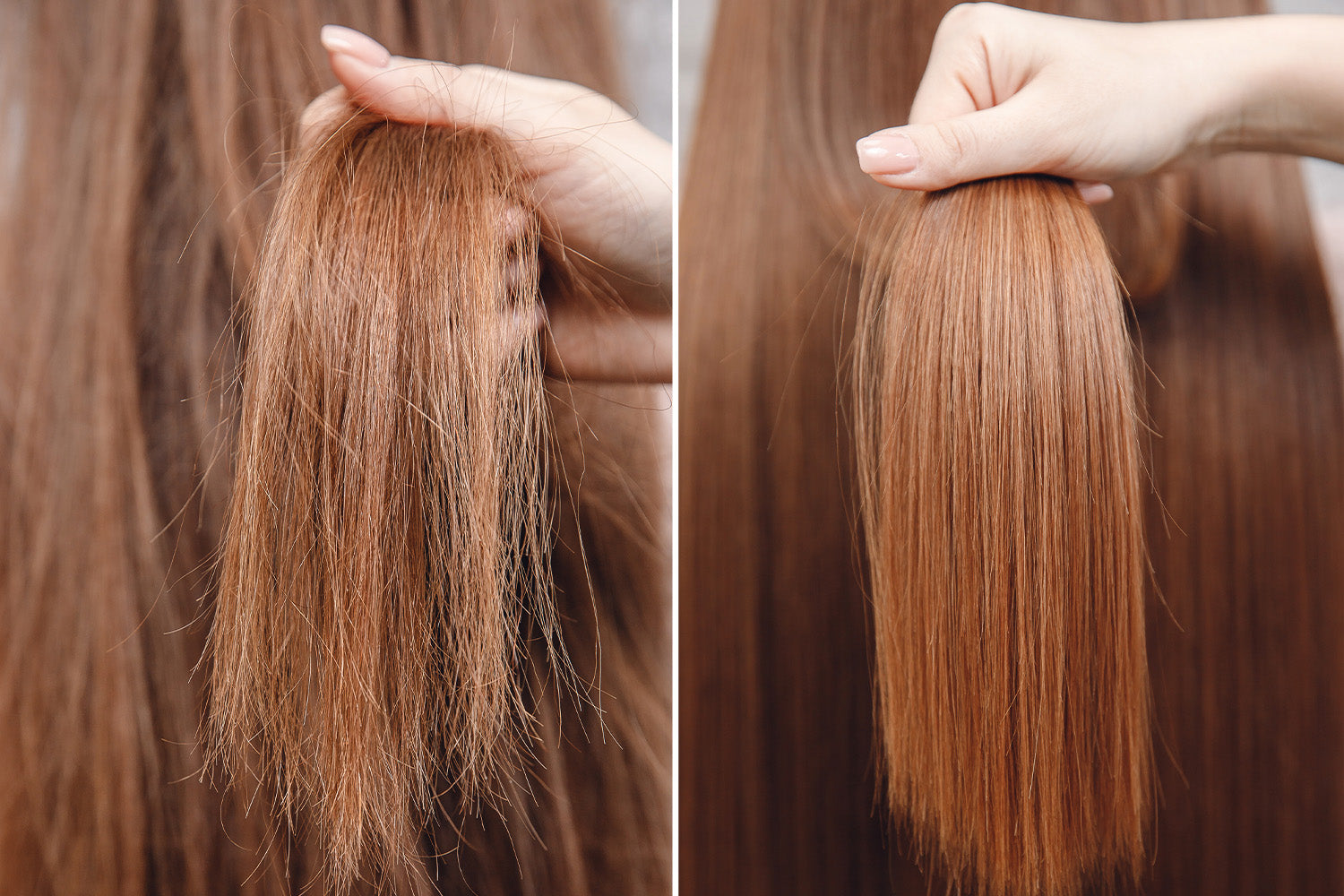
Hair is primarily made of keratin — a sulfur-rich structural protein.
Disulfide bonds (sulfur bonds) are what give hair its strength and shape.
Although large-scale clinical trials on MSM and hair growth are limited, sulfur’s role in keratin structure is well established biologically.³
The 2015 clinical study referenced above also reported improvements in hair shine and volume in participants taking MSM.¹
This supports the theory that adequate sulfur availability contributes to hair integrity and resilience.
MSM & Nail Strength
Like hair, nails are composed of keratin.
Sulfur bonds are critical to nail hardness and structural stability.
The same placebo-controlled MSM study observed improvements in nail appearance and strength following supplementation.¹
While more targeted nail studies would be valuable, mechanistically the sulfur-keratin relationship is clear.
MSM, Oxidative Stress & Ageing
Skin ageing is not just structural decline — it also involves oxidative stress and inflammatory processes.
MSM has been shown in laboratory and clinical research to:
-
Modulate inflammatory signalling pathways
-
Reduce oxidative stress markers
-
Support antioxidant activity
A review in Nutrients concluded MSM demonstrates anti-inflammatory and antioxidant activity that may contribute to broader tissue support.²
This is relevant because oxidative stress contributes to collagen breakdown and visible skin ageing.

Where MSM Fits in a Hair, Skin & Nail Routine
MSM works differently from topical skincare and collagen supplements.
It doesn’t replace them — it complements them.
Collagen provides structural peptides.
Vitamin C supports collagen synthesis.
MSM supplies sulfur — a key component involved in connective tissue and keratin structure.
Each plays a different role.
References (Hyperlinked)
-
Muizzuddin N et al. “A Double-Blind, Placebo-Controlled Clinical Study Evaluating the Effects of MSM on Facial Wrinkles, Skin Firmness and Elasticity.” Natural Medicine Journal. 2015.
https://pubmed.ncbi.nlm.nih.gov/32083522/ -
Butawan M et al. “Methylsulfonylmethane: Applications and Safety of a Novel Dietary Supplement.” Nutrients. 2017.
https://www.ncbi.nlm.nih.gov/pmc/articles/PMC5372953/ -
Robbins CR. “Chemical and Physical Behavior of Human Hair.” Springer, 2012. (Structural role of disulfide bonds in keratin.)
0 comments